
Burst Pipe: Homeowners Shut the Main, Take Insurer Ready Photos
The moment you spot a burst pipe, shut off your main water supply, cut electricity to any wet outlets or appliances, and call a licensed plumber before you do anything else. Open the nearest faucets to drain the lines and relieve pressure while you wait. Grab your phone and photograph the damage as it happens, not after you’ve mopped it away. Everything else, including cleanup and insurance calls, comes second.
TL;DR:
Shutting off the main water supply is the top priority, preferably at a predictable location like inside near the water entry point or outside at the curb, using the correct valve type.
Limiting water damage involves immediate actions like blocking water flow, removing furniture and electronics, and deploying fans and dehumidifiers; using rubber-soled shoes and gloves reduces electrical shock risk.
Call a licensed plumber first to repair the leak, followed by a water restoration company if structural materials are saturated, and notify the water utility if the shutoff is at the street.
Photograph damage and itemize belongings before cleanup to prevent claim delays, and notify your insurer within 24 hours, clarifying whether the leak was sudden or slow to protect coverage.
Start drying within 24 to 48 hours to prevent mold growth, removing soaked porous materials and calling professionals if mold appears or drying is delayed beyond two days.
Table of Contents
Burst Pipe What to Do First: Finding and Working Your Main Shutoff
Every second the water runs, the repair bill climbs. Your first job is finding the valve that stops it, and that means knowing your house before disaster strikes, not during it.
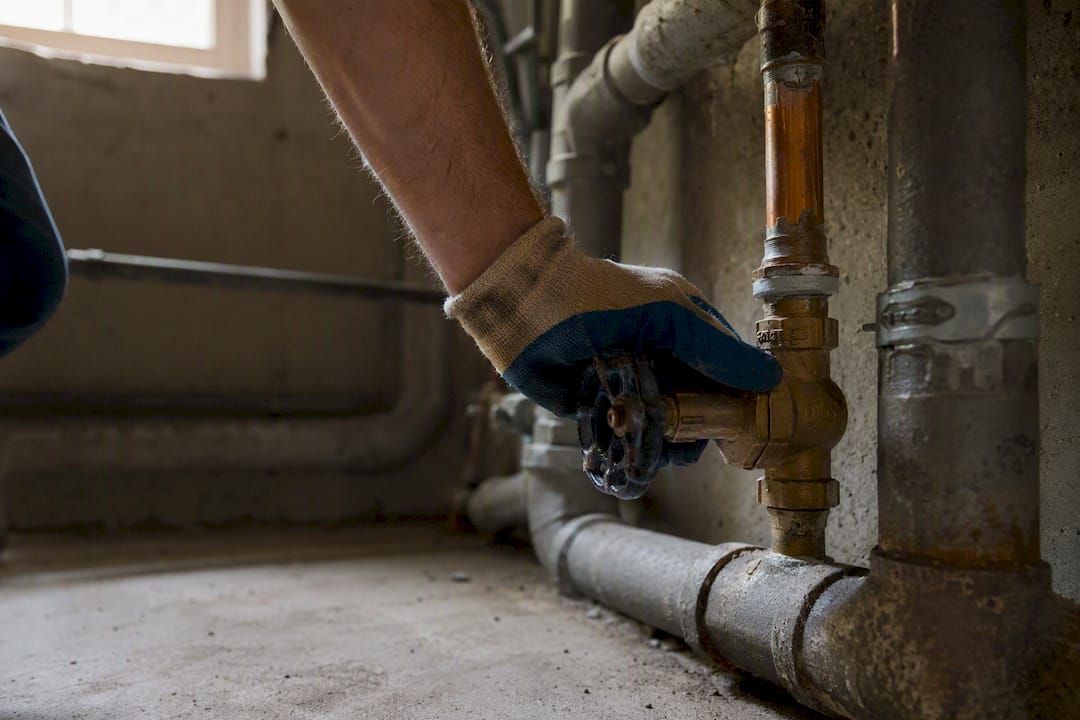
Most homes have the main shutoff in one of a few predictable spots: inside near where the water line enters the house (often a utility closet, basement, or garage), or outside near the water meter or a curb box at the edge of your property. Newer homes sometimes route it near the water heater. If yours sits underground in a curb box, you’ll need a curb key to open it, a $10 to $15 tool sold at any hardware store, and it’s worth owning one before you ever need it.
Once you’ve located the valve, here’s how to shut it down:
Identify the valve type. A gate valve has a round wheel handle and needs several full turns clockwise to close. A ball valve has a lever handle and shuts with a quarter turn.
Turn it fully. Don’t stop halfway. A partially closed valve still lets water through.
Open a faucet or two on the lowest level of the house to drain the remaining water out of the pipes and relieve pressure.
Switch off your water heater at the breaker or gas valve if water is still flowing, since running it dry can damage the unit.
Cut power at the breaker panel for any circuit near standing water, but only if you can reach the panel without stepping through water yourself.
If the main shutoff is outside or at the street and you can’t reach it safely, call your water utility. They can shut it off from their end. Never wade into standing water near an outlet, appliance, or panel. That risk isn’t worth saving a few minutes.
Stop the Spread: Containing and Removing Water Fast
Once the water’s off, your priority shifts to limiting what it touches. Every minute standing water sits on wood floors, drywall, or carpet, it soaks in deeper.
Block the flow path with towels, buckets, or a makeshift barrier of plastic sheeting and rolled rugs.
Move furniture, rugs, and electronics out of the wet zone, or set them on blocks if you can’t move them far.
Pull up standing water with a wet/dry shop vac first. It moves far more water per minute than a mop.
Follow up with mops and old towels for the last inch of moisture.
Run box fans and a dehumidifier the moment power is safely back on in that area.
Keep kids and pets out of the wet zone until you know it’s free of electrical risk.
Pro Tip: Rubber-soled shoes and a pair of dish gloves take thirty seconds to grab and dramatically cut your shock risk while you’re hauling wet towels near outlets.
Who to Call First When a Pipe Bursts
Your phone calls matter almost as much as your hands. Call in the wrong order and you’ll wait longer for help or pay more for damage that could’ve been contained.
A licensed emergency plumber first. They stop the leak at its source and can often make same-day repairs on burst copper, PVC, or PEX lines.
A water restoration company if flooring, drywall, or insulation is saturated. Plumbers fix pipes; restoration crews handle structural drying and extraction, and the two jobs often need to happen in parallel.
Your water utility if the shutoff sits at the street or meter and you couldn’t close it yourself.
Emergency services or your gas and electric utility if you smell gas or see sparking, arcing, or a breaker that won’t stay off.
When you call, have these details ready: your address, the exact location of the leak (which room, which wall or fixture), what’s visibly damaged, whether power is still on in that area, and whether anyone is at risk. A dispatcher who gets clear answers in fifteen seconds sends help faster than one who has to ask three follow-up questions.
For readers around San Antonio, Texas Comfort Crew’s plumbing team handles exactly this kind of call, day or night.
Photographing the Damage: What Your Insurer Will Actually Ask For
Insurance adjusters see burst pipe claims constantly, and the ones that get delayed or reduced almost always share one problem: missing documentation from before cleanup started.
Shoot wide shots and close-ups of the burst pipe itself, the standing water, and every damaged item, before you clean up if it’s safe to wait even a few minutes.
Build a dated inventory of damaged belongings, from furniture to electronics to flooring, and hang onto receipts for anything you buy in response: fan rentals, a dehumidifier, the plumber’s call-out fee.
Call your insurer within the first day if possible. Ask specifically whether your policy distinguishes between a sudden burst and a slow, long-term leak. Many do, and coverage can differ significantly between the two.
Skip the DIY permanent fix before your insurer or plumber has seen the damage. Improperly executed repairs are a common reason adjusters push back on claims.
Speed matters here too. Don’t let documentation delay cleanup so long that mold gets a head start. A few extra minutes for photos is fine. A few extra hours is not.
How Fast Mold Sets In After a Burst Pipe
Mold doesn’t wait for your insurance claim to process. The EPA notes that mold can begin growing within 24 to 48 hours of water intrusion, which means your drying window is shorter than most homeowners assume.
Extract standing water immediately with a shop vac, then run fans and a dehumidifier continuously, not just overnight.
Pull out soaked carpet padding, upholstery, and any porous material that can’t dry within that first day or two. It’s usually cheaper to replace than to try saving.
For anything beyond a small, contained area, bring in a professional-grade drying setup. Consumer fans and a single dehumidifier can’t match the airflow a restoration crew uses.
Call a remediation specialist if you see or smell mold starting, or if drying stretches past 48 hours without visible progress.
That 24 to 48 hour window isn’t a soft guideline. It’s the difference between a straightforward dry-out and a remediation job that tears into walls and subfloor.
Temporary Pipe Fixes That Won’t Make Things Worse
A short-term patch buys you time until a plumber arrives. It’s not a substitute for a real repair, and treating it like one is how small leaks become expensive ones.
Pipe repair clamps slip over the damaged section and tighten down to stop the leak temporarily.
A rubber patch held with a C-clamp works in a pinch on a small split or pinhole.
Silicone tape or waterproof plumbing tape wrapped tightly can slow a slow leak, though it rarely stops a full burst.
Photograph whatever fix you attempt, and label it clearly as temporary so nobody mistakes it for a finished repair. Steer clear of cutting into pressurized pipe, attempting to solder a joint, or swapping out sections of pipe yourself. These jobs create code and safety problems fast when done without the right tools and experience. Tell the plumber exactly what you did and with what, the moment they walk in.
Turning the Water Back On Safely After Repair
Once the plumber finishes, restoring service isn’t as simple as flipping the valve back open all the way.
Open the main shutoff slowly, not in one motion, so pressure builds gradually and doesn’t stress the fresh repair.
Check every joint near the repair for drips or weeping as pressure returns.
Hold off on re-energizing an electric water heater until you’re sure the lines are fully filled. Running the heating element dry can burn it out.
Watch the repaired area for moisture over the next 48 to 72 hours. A slow drip often shows up after the initial pressure test looks clean.
Longer term, insulate any exposed pipes in crawl spaces, attics, or exterior walls, and keep some heat flowing through those areas during cold spells. A yearly plumbing inspection catches corrosion and weak joints before they fail. A maintenance membership built around seasonal checks is often cheaper over a few years than one emergency repair.
Why Texas Comfort Crew’s Approach Matters in an Emergency
A repair-first mindset matters most when you’re standing in an inch of water deciding who to trust. Texas Comfort Crew evaluates the actual damage first and recommends replacement only when repair genuinely won’t hold, which keeps emergency calls from turning into unnecessary upsells.
The crew covers the Greater San Antonio area, including fast-growing suburbs where older plumbing and new construction sit side by side. Transparent communication means you know what’s being fixed and why before any work starts, not after the invoice arrives.
Getting Your Insurance Claim Approved Without the Runaround
Filing a burst pipe claim goes faster when you treat the call like a structured conversation instead of a panicked venting session. Start with the facts: when you discovered the leak, what you did to stop it (shutoff valve, temporary patch, plumber called), and what’s visibly damaged.
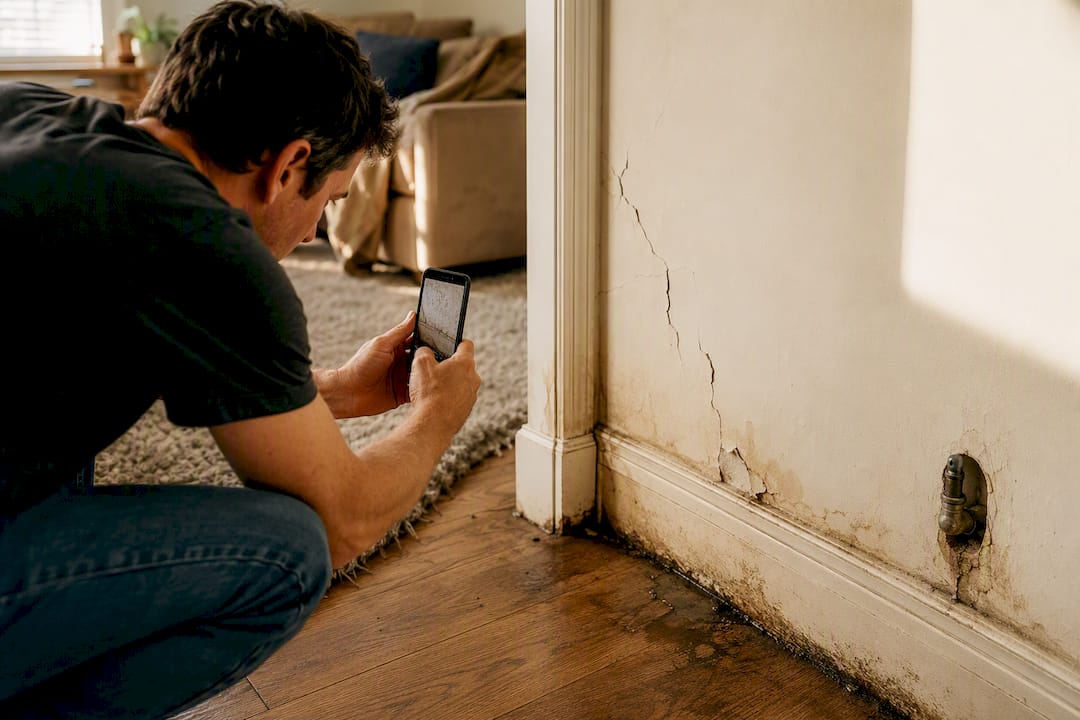
Ask your adjuster directly whether your policy covers sudden bursts differently than gradual leaks, since that distinction often determines how much you’re reimbursed. Some policies exclude damage from a leak that was slow and ongoing for weeks, treating it as a maintenance failure rather than a covered event. If your pipe genuinely burst without warning, say so clearly and back it up with your photos and the plumber’s assessment.
Keep a written log of every call, including the date, the representative’s name, and what was discussed. Adjusters juggle dozens of claims at once, and a paper trail protects you if details get lost between departments. Submit your photos, inventory, and receipts as a single organized packet rather than trickling them in over separate emails.
If the adjuster’s initial estimate feels low relative to your plumber’s or restoration company’s quote, ask for a re-inspection before accepting it. You’re allowed to push back with documentation, and most insurers expect at least one round of negotiation on larger water damage claims. Nationwide and other major carriers note that claims move faster and settle higher when documentation is submitted early and organized clearly, rather than assembled after the fact.
Winterizing and Prevention: Stopping the Next Burst Before It Happens
Most burst pipes trace back to one of three causes: freezing, age-related corrosion, or excessive water pressure. All three are preventable with a little seasonal attention.
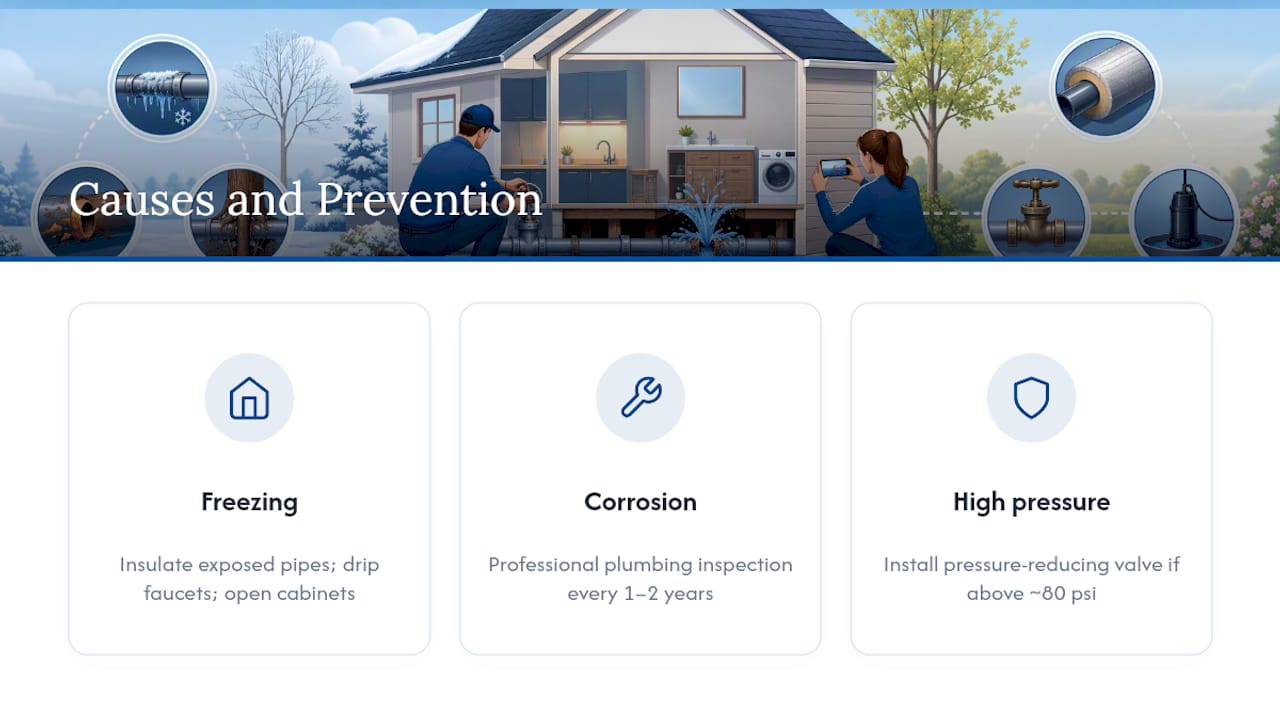
Before the first hard freeze each year, insulate any pipes running through unheated spaces: crawl spaces, attics, garages, and exterior walls. Foam pipe sleeves cost only a few dollars per length and take an afternoon to install. On the coldest nights, let faucets fed by exposed pipes drip slightly and open cabinet doors under sinks so warm household air can reach the plumbing underneath.
If you’re leaving town during winter, don’t turn the heat off entirely. Set the thermostat no lower than 55 degrees, and consider shutting off your main water supply and draining the lines if you’ll be gone more than a few days. A frozen pipe that bursts while you’re away can run for hours before anyone notices.
Beyond freezing, aging galvanized or old copper pipes weaken over time and become more prone to splitting under normal pressure. A professional plumbing inspection every year or two catches corrosion and worn fittings while they’re still cheap fixes. High water pressure, above roughly 80 psi, also stresses pipes and fittings across the whole house; a pressure-reducing valve is a one-time fix that protects every line at once.
Know your shutoff valve’s exact location and practice turning it before you ever need to in a panic. That thirty-second habit is the single cheapest insurance policy against major water damage you’ll ever have.
What the Checklists Get Wrong About Burst Pipes
Most burst pipe guides read like they were written for someone standing calmly in a dry kitchen, not someone ankle-deep in water with a phone in one hand. The conventional advice, shut off the water, call a plumber, isn’t wrong. It’s just incomplete about sequencing, and sequencing is where people lose the most money.
The biggest gap I see is the false choice between documenting damage and acting fast. Homeowners either skip photos entirely and forget them until the adjuster asks, or they spend twenty minutes staging photos while water keeps spreading into a second room. Neither is right. Shut off the water and power first, then spend ninety seconds with your phone camera before you touch a mop. That’s the whole balance.
The other overlooked piece is prevention getting treated as a separate topic from emergency response, when it’s really the same conversation. The homeowners who know their shutoff valve, own a curb key, and had a plumber inspect their lines last year are the ones whose “emergency” turns into a forty-minute inconvenience instead of a gutted living room. Preparedness isn’t the boring part of this topic. It’s the part that decides how bad your worst day actually gets.
— Dan Patino
Need Emergency Plumbing Help Right Now?
Texas Comfort Crew is built for exactly the moment you’re in right now: water spreading, valve located or not, and a decision to make fast. Unlike a general contractor or a big-box referral service, you get a licensed plumber who evaluates the damage on arrival and repairs what can be repaired instead of pushing a full replacement you don’t need.

When the crew arrives, they confirm your main shutoff is fully closed, set up temporary containment if water is still spreading, and assess the pipe for a permanent fix versus a section replacement, explaining the difference before any work starts. Have your address, the shutoff status, and your damage photos ready when you call. If you’re in the Spring Branch area or anywhere else across the Greater San Antonio service area, call now to get a plumber dispatched, or check the membership plan if you’d rather catch the next weak joint before it becomes tonight’s emergency.
Where to Learn More
For mold prevention, see the EPA’s mold cleanup guidance. For water damage restoration steps, Infinity Restoration’s blog covers extraction and drying in detail.
Sources
FAQ
What should I do if a pipe bursts in my home?
Shut off your main water supply immediately, turn off electricity near any wet outlets or appliances, open a faucet to drain the lines, photograph the damage, and call a licensed plumber.
Should I turn off the water after a pipe bursts?
Yes, always. Shutting off the main valve is the single most important action you can take, since it stops the damage from spreading while you arrange repairs and containment.
How urgent is a burst pipe?
Extremely urgent. Water damage compounds by the minute, and mold can begin forming within 24 to 48 hours, so shutoff, containment, and a call to a plumber should all happen within the first hour.
Can I fix a burst pipe myself?
You can apply a temporary measure like a repair clamp or a rubber patch with a C-clamp to slow the leak, but a licensed plumber should handle the permanent repair since improper DIY work can create safety and code issues and may affect your insurance claim.
How do I know if my pipe actually burst versus just a small leak?
Watch for a sudden pressure drop at your faucets, hissing or running water sounds when nothing is turned on, unexplained water stains, or a spike in your water bill, all signs consistent with a burst rather than a minor drip.
Comments