
San Antonio Homeowners: 3 Fast, Safe Fixes for a Slow Sink Drain
Try this first: seal the overflow with a wet rag and plunge the sink hard for 15 to 20 seconds, then pull the pop-up stopper and clear off the hair and gunk wrapped around it. If water’s still crawling, flush the drain with the hottest tap water you have plus a squirt of dish soap. Most single-sink slowdowns clear within minutes using one of these three moves; if none work, move on to a drain snake and a P-trap cleaning before you consider calling a plumber.
TL;DR:
Mechanical fixes such as plunging and snaking should be the first attempts because they physically remove blockages, avoiding dangerous chemical reactions.
Avoid running boiling water through PVC pipes, as it can warp or soften the plastic and cause further damage or leaks.
Persistent or widespread slow drains, gurgling sounds, or sewage smells indicate a larger problem requiring professional inspection of the main sewer line or venting system.
Cleaning the P-trap and pop-up stopper often resolves most single-sink issues, but multiple fixtures acting slow suggest an upstream clog or venting issue.
Regular habits like using mesh strainers and avoiding flushing non-degradable items prevent future slowdowns and maintain drain health.
Table of Contents
Quick Fixes to Try Before Anything Else
Start with the safest, least invasive option and work your way up. Mechanical fixes come before chemicals, always, because chemicals can mask a problem instead of solving it, and mixing the wrong ones is genuinely dangerous.
Flush hot water and dish soap. For a kitchen sink draining slowly, run the hottest tap water for two minutes with a few drops of dish soap. This melts and breaks up fresh grease, though it does little for hair clogs or compacted debris.
Plunge it properly. Seal the overflow opening with a wet rag, add a couple inches of water to the basin, and plunge in fast, steady strokes for 20 seconds.
Pull the pop-up stopper. Bathroom sinks trap hair right at the stopper more often than anywhere else in the line.
Grab a drain zip tool. A cheap plastic hair snake, dragged down the drain and back out, often pulls up the actual culprit in seconds.
Check the disposal. If it’s a kitchen sink, run the garbage disposal briefly. A jammed or dead disposal can look exactly like a slow drain issue.
Pro Tip: Never run boiling water straight down a PVC drain pipe. It can soften or warp the plastic joints. Very hot tap water works fine; a rolling boil doesn’t buy you much extra cleaning power and adds real risk.
Why Is My Sink Draining Slowly? How to Diagnose It
The single most useful question you can ask yourself: is it just this sink, or is something else in the house acting up too? A slow bathroom sink drain paired with a gurgling toilet or a sluggish tub points toward a shared line problem, not a simple local clog. One sink alone acting sluggish almost always means something physical is stuck close to that fixture.
Common causes break down by room:
Bathroom sinks: hair tangled with soap scum, usually caught right at the stopper or just below it
Kitchen sinks: grease, food particles, and coffee grounds that harden as they cool and travel through the pipe
Either sink: a dirty pop-up assembly, a P-trap packed with debris, or foreign objects (jewelry, bottle caps, toys) that got knocked in
Whole-house symptom: venting problems or a main sewer line blockage, especially if you smell sewage or hear gurgling from other drains
Pay attention to timing, too. A drain that got slow gradually over weeks usually means buildup. One that stopped suddenly usually means something specific fell in or lodged.
Step-by-Step: How to Clear a Slow Sink Drain Yourself
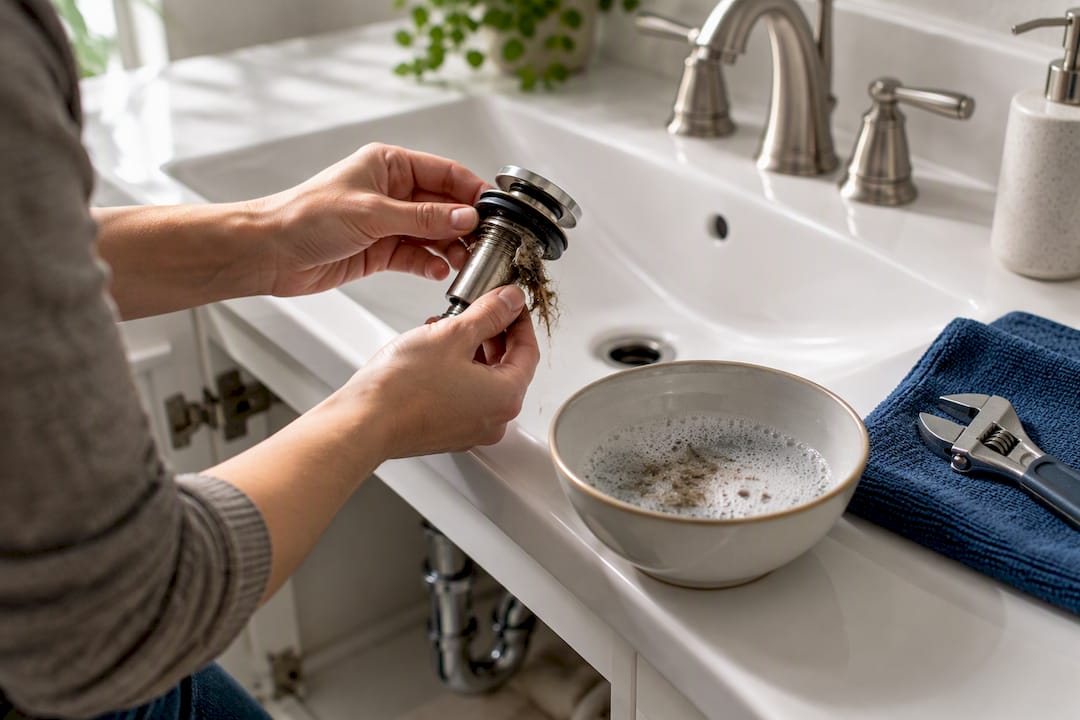
Clean the pop-up stopper. Most bathroom stoppers lift out after you loosen a small nut under the sink (the pivot rod) or simply twist and pull straight up, depending on your model. Wipe off the hair and soap film, then rinse before reinstalling.
Plunge with technique. Block the overflow hole with a wet rag so you get real suction, keep enough water in the basin to cover the plunger cup, and push down and pull up in quick, controlled strokes. Give it 15 to 20 pumps before you check your progress.
Snake it. Feed a flexible hair snake or drain zip tool down the drain until you feel resistance, twist gently, and pull back out. Plumbing pros widely recommend the hair snake as a first-line tool for exactly this reason: it’s cheap, it’s safe, and it physically removes the blockage instead of just dissolving part of it.
Clean the P-trap. This is the curved pipe under the sink, and it’s usually the last DIY step before you’d need a pro.
Place a bucket underneath to catch water and debris.
Loosen the slip nuts on both ends of the trap by hand or with channel-lock pliers.
Slide the trap free and dump the contents (this is almost always where the real clog was hiding).
Check the old washers. Reusing a warped or cracked washer is a leading cause of leaks after reassembly, more so than under-tightening the nuts.
Reinstall and run water to check for leaks before you walk away.
Baking soda and vinegar can fizz and loosen light surface film, but treat it as a finishing touch, not a fix. Baking soda and vinegar are not a dependable substitute for physically pulling out hair or compacted grease, and pouring it down a drain that’s still packed with debris just wastes a fizzy science experiment.
Never mix a commercial caustic drain opener with anything else in that pipe. These products carry real handling warnings for a reason, and combining chemicals in an enclosed pipe can produce dangerous reactions.
When to Stop DIY and Call a Plumber
Some signs mean the problem is bigger than your sink, and no amount of plunging will fix it.
More than one fixture is slow, or your sink gurgles when you flush the toilet or run the washing machine
The clog comes right back within days of you clearing it
You notice a persistent sewer smell anywhere in the house
You’ve already cleaned the stopper and P-trap and it’s still slow
You can’t get the trap back together cleanly, or you find a crack, corrosion, or a leak while you’re under there
Call a plumbing professional at that point rather than escalating with stronger chemicals. A plumber’s toolkit for these situations usually includes a camera inspection of the line, a check on your vent stack, and testing whether the backup is isolated to a branch line or coming from the main sewer line. They can also locate your sewer cleanout if the issue traces back that far.
Habits That Keep Drains From Slowing Down Again
A slow drain rarely comes out of nowhere. It builds over weeks or months from the same handful of habits, and fixing those habits is cheaper than fixing the pipe.
Install a cheap mesh strainer or hair trap in the bathroom sink and empty it weekly
Collect cooking grease in a can or jar and toss it in the trash instead of pouring it down the drain
Run hot water through the kitchen sink for a minute after you finish washing greasy dishes
Pull the pop-up stopper and wipe it down once a month, not just when the sink starts acting up
Never flush wipes, dental floss, coffee grounds, or paint down any drain
If you’re on a septic system, skip harsh chemical cleaners entirely. Solvents and heavy-duty drain openers can damage the bacterial balance that makes your septic tank actually work, and mechanical cleaning is the safer long-term habit anyway.
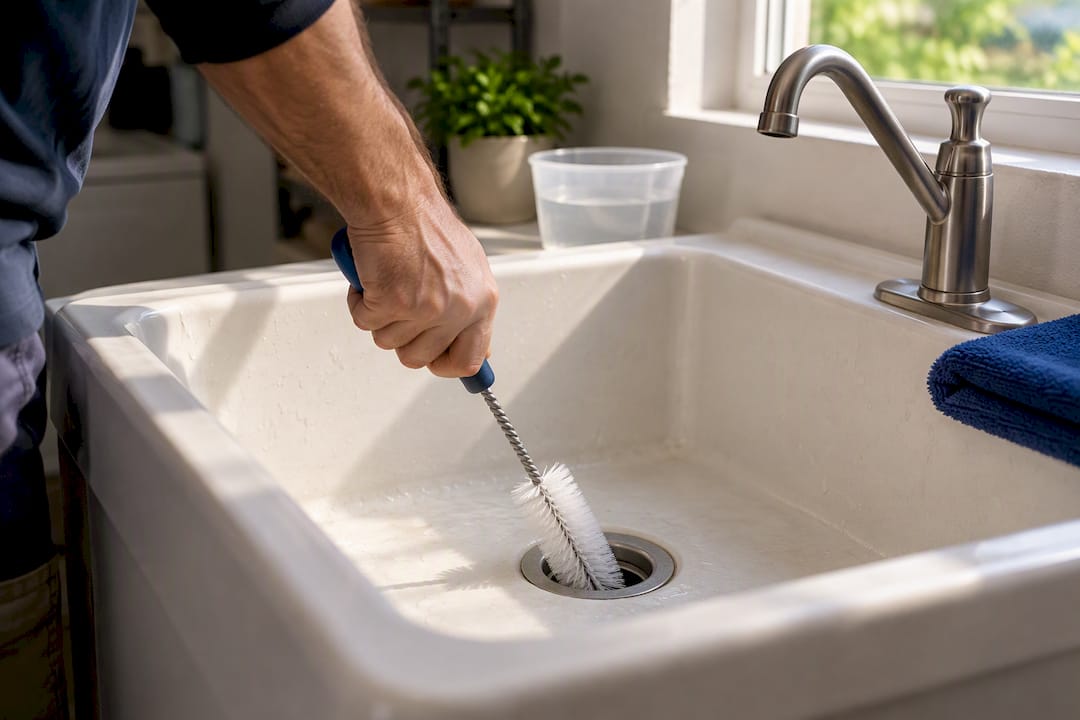
Pro Tip: If you notice small flies hovering near your drain, that’s usually a sign of organic film built up inside the pipe walls, not just standing water. A stiff bottle brush scrubbed inside the drain opening clears it faster than pouring more hot water down there.
What a Plumber Actually Checks That You Might Miss
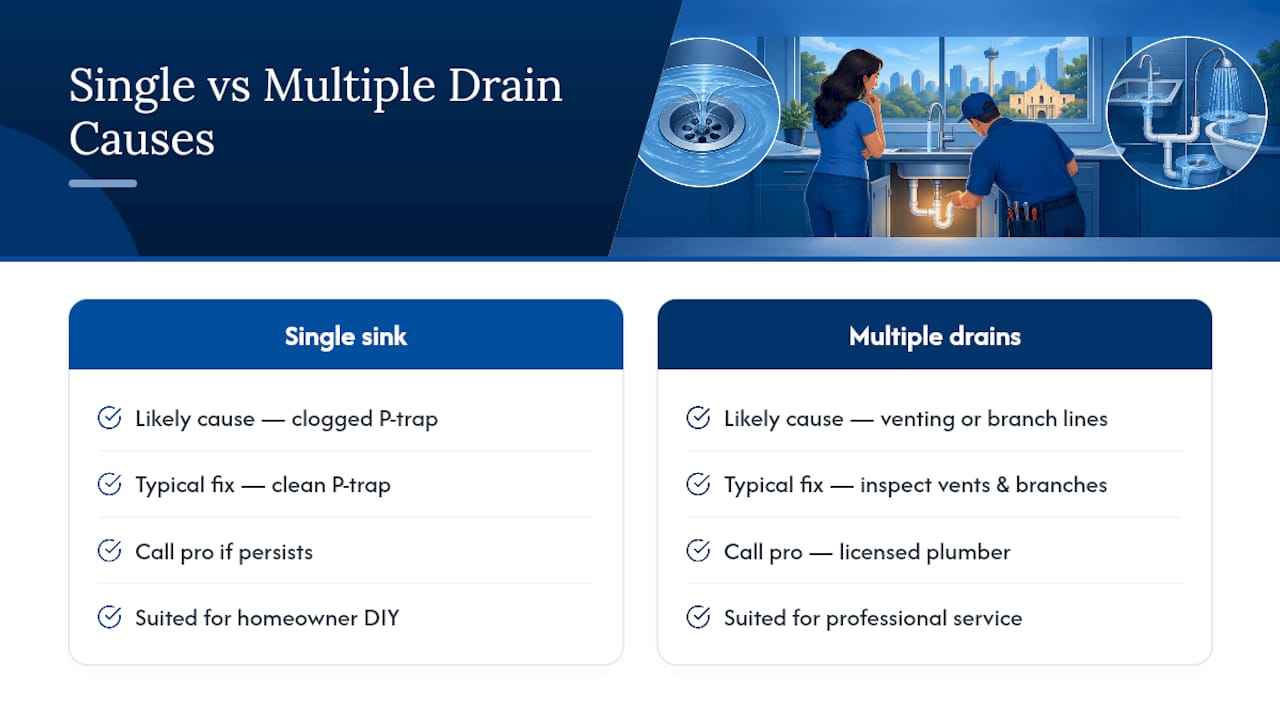
Homeowners tend to make the same two mistakes: reaching for a chemical drain opener before trying anything mechanical, and stopping their check at one sink when the real issue is upstream. A P-trap cleaning solves most single-fixture slowdowns. When multiple drains act up together, the fix usually requires checking venting and branch lines, work better suited to a licensed plumbing service than a weekend project.
A Plumber’s Honest Take on DIY Drain Fixes
Fixing your own slow drain is satisfying, and most of the time it’s the right call. Repairing a P-trap or clearing a stopper saves you a service call and usually solves the problem outright. Know your limits, though. Once symptoms spread past one sink, a professional diagnosis protects both your plumbing and your time.
— Dan Patino
Get a Straight Answer on Your Drain, Not a Sales Pitch
Texas Comfort Crew fixes what’s actually broken instead of pushing a bigger job than you need. If you’ve already plunged, snaked, and cleaned the trap and the sink is still slow, that’s usually a sign of something further down the line, and it’s worth a second set of eyes before it turns into a backup.

A service visit starts with an honest inspection, not a quote for a repipe. Our plumbers check the fixture, the trap, and where necessary the branch and main lines, then walk you through exactly what’s causing the slowdown and what it takes to fix it, repair-first whenever that’s the smarter route. That’s the whole philosophy behind our drain and sewer line repair services: clear answers before any commitment to bigger work. If you’re in the Greater San Antonio area and your sink is still fighting you after the DIY steps above, check our service area coverage and get a visit scheduled.
Sources
FAQ
Why is my sink draining slow but there’s no visible clog?
The blockage is almost always inside the P-trap or wrapped around the pop-up stopper linkage, both hidden from view. Grease and soap film also coat the inside of the pipe gradually, narrowing the passage without ever forming a solid, visible plug.
What do plumbers recommend for slow drains?
Plumbing pros generally recommend starting with mechanical tools like a flexible hair snake rather than chemical cleaners, since snaking physically removes the blockage instead of just dissolving part of it. If mechanical methods and a P-trap cleaning don’t solve it, that’s the point to call a licensed plumber like the team at Texas Comfort Crew for a full diagnosis.
What can I pour down my sink to make it drain faster?
Hot water with a bit of dish soap is the safest first pour, especially for grease in a kitchen sink. Baking soda and vinegar can help with light residue, but they’re not a dependable fix for hair or compacted debris and shouldn’t replace physically removing the clog.
Does dish soap actually unclog drains?
Dish soap alone won’t clear a physical blockage of hair or debris, but paired with hot water it’s genuinely effective at breaking up fresh grease before it hardens. Think of it as prevention and light maintenance, not a cure for a drain that’s already badly clogged.
How do I know if my slow drain is a bigger plumbing problem?
If more than one fixture is slow, or your sink gurgles when another drain runs, the issue likely sits beyond your sink in a shared line or the venting system. That’s a clear signal to call a plumber rather than keep working on the sink alone.
Recommended
Comments