
Don't Call a Plumber Yet: Water Heater Checks by Type for Homeowners
Updated: Sep 20
If your water heater isn’t heating, first find out if every fixture is cold or just one. If it’s every fixture, check the breaker on an electric unit or the pilot on a gas unit before anything else. Skip the reset attempt entirely if you smell gas, see standing water at the tank base, or notice the pressure relief valve discharging. Those are call-a-pro-now situations, not weekend projects.
TL;DR:
A water heater that remains cold after resetting likely has a failed element, thermostat, or short circuit that requires testing or replacement.
Gas units with odors, active leaks, or discharging pressure relief valves should be serviced immediately by a professional to avoid hazards.
Tankless systems need proper flow rates and clear vents, as sediment buildup or closed valves often mimic failure symptoms.
Repeated trips of the breaker or ECO reset signals underlying wiring or thermostat issues, making further resets risky and indicative of eventual failure.
Homeowners should perform basic diagnostics like running hot water at multiple fixtures before calling a technician, saving time and reducing unnecessary service calls.
Table of Contents
Safety Checks Before You Touch a Water Heater
Water heaters combine electricity, gas, and pressurized hot water. Get one of those wrong and a simple no-hot-water problem turns into a real hazard.
Run through this before you open a single panel:
Smell gas anywhere near the unit? Leave the house immediately and call 911 or your gas utility from outside. Don’t flip switches or light anything on your way out.
Cut power at the breaker before removing any access panel on an electric heater.
Shut off the gas valve at the appliance if you plan to inspect a gas unit, and don’t attempt to relight a pilot if the odor persists or you’re unsure what you’re smelling.
Water pooling at the base of the tank, or the temperature and pressure relief (TPR) valve actively discharging? Stop troubleshooting and call a plumber. That’s a tank leak scenario, not a reset issue.
Pro Tip: Keep a flashlight near the water heater. Most units sit in closets, garages, or attics with poor lighting, and trying to read a reset button or pilot window in the dark is how people get burned or make a wrong call.
How Do You Troubleshoot a Water Heater That Won’t Heat?
Start every diagnosis the same way, regardless of fuel type: turn on hot water at two or three different fixtures. If all of them run cold, the heater or its power source is the problem. If just one faucet runs cold, you’re usually dealing with a mixing valve or a faucet cartridge, not the tank itself. This single check, recommended by the Department of Energy, usually takes under five minutes and saves you from troubleshooting the wrong system entirely.
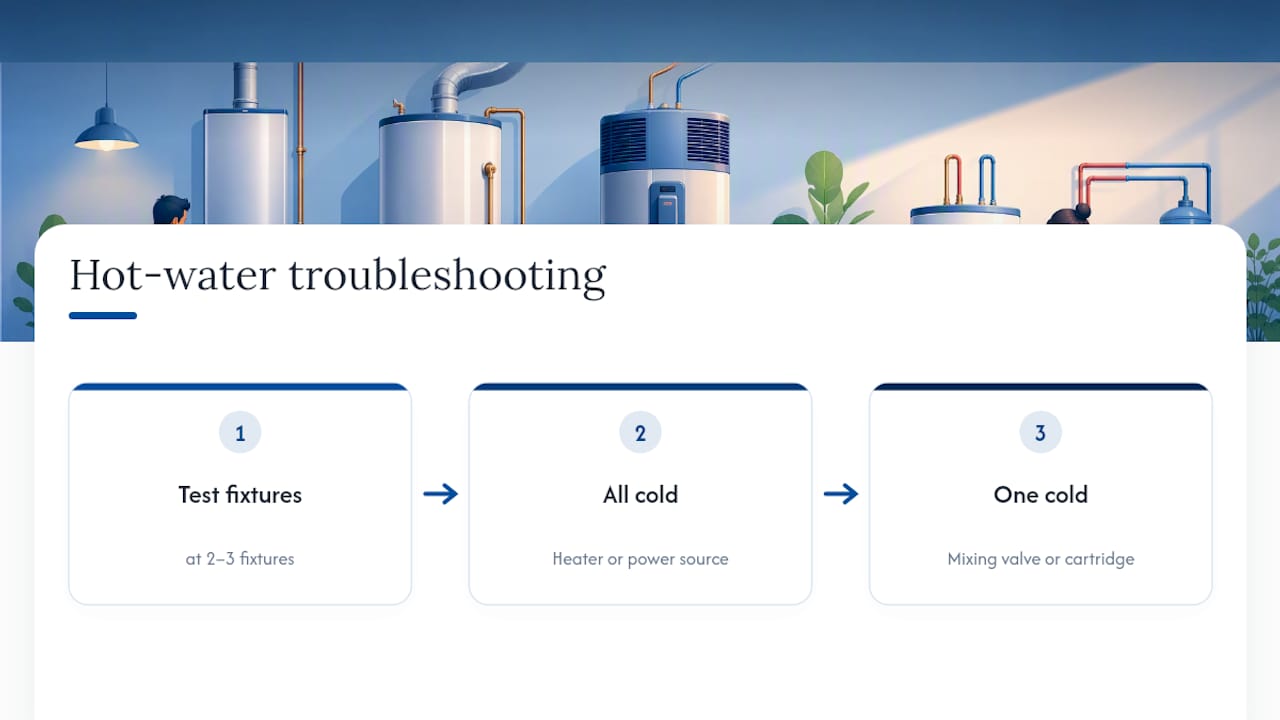
Once you’ve confirmed it’s the heater, work through the checklist that matches your unit.
Electric water heater problems
Go to your electrical panel and fully switch the double-pole breaker off, then back on. A breaker that looks “on” can still be tripped internally.
If it trips again immediately, stop. That points to a short or a failed element, not something you should keep forcing.
If the breaker holds, cut power at the panel again, then remove the upper access panel on the tank and look for the red high-limit reset button. This ECO (energy cutoff) reset trips when internal temperatures climb to roughly 170°F to 180°F, and it’s a common reason for a sudden cold shower.
Press the reset button firmly, restore power, and give the tank time to heat.
If it trips again, or if you’re comfortable with a multimeter, test the heating elements. A working 4,500 watt element typically reads 10 to 30 ohms; infinite resistance means it’s dead.
Symptom patterns matter here. No hot water at all, even right after the tank should have recovered, usually points to a failed upper element or upper thermostat. Hot water that starts fine but runs out fast points to the lower element instead. Replacement elements typically run $10 to $30 in parts, which is worth knowing before anyone quotes you a bigger job.
Gas water heater not working
For a standing pilot model, confirm the gas supply is actually on at the meter and the appliance valve, then look through the viewing window for a flame. If it’s out, most manufacturers print relighting instructions right on the tank, and following them is safe as long as you don’t smell gas. A pilot that won’t stay lit after a proper relight almost always means a failed thermocouple, a small sensing rod that’s cheap to replace but requires the gas valve assembly to be accessed correctly.
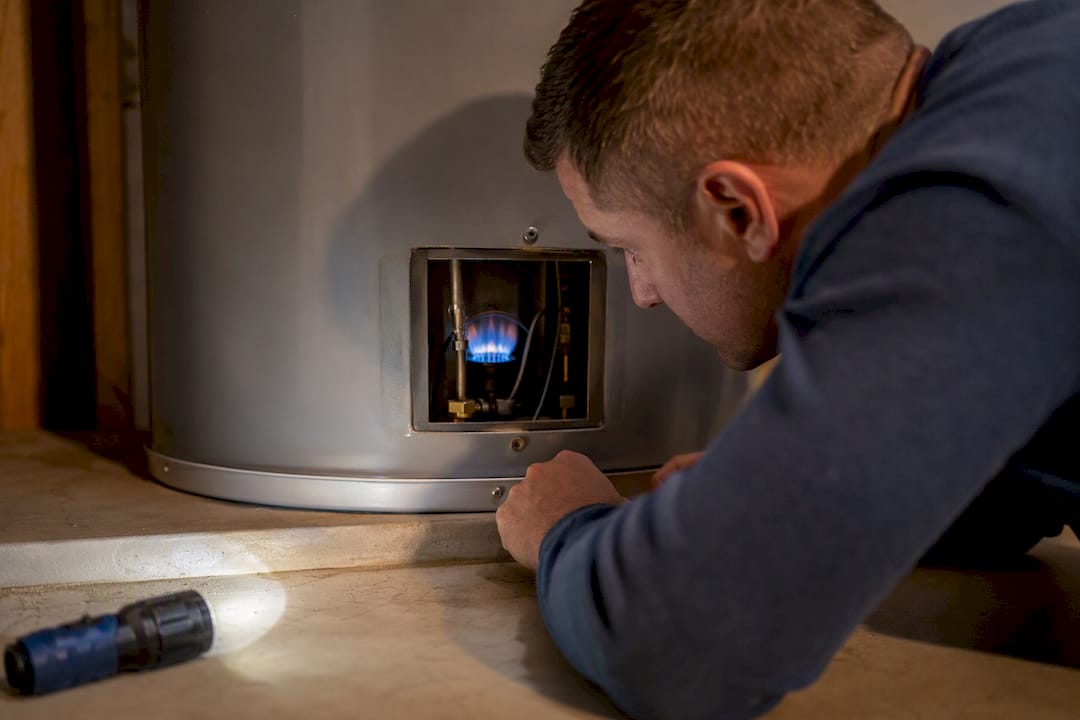
Electronic ignition models skip the pilot step but add a control board. If the display shows nothing or throws an error, confirm gas is on first, then check whether the unit has its own reset or power switch.
Tankless water heater troubleshooting
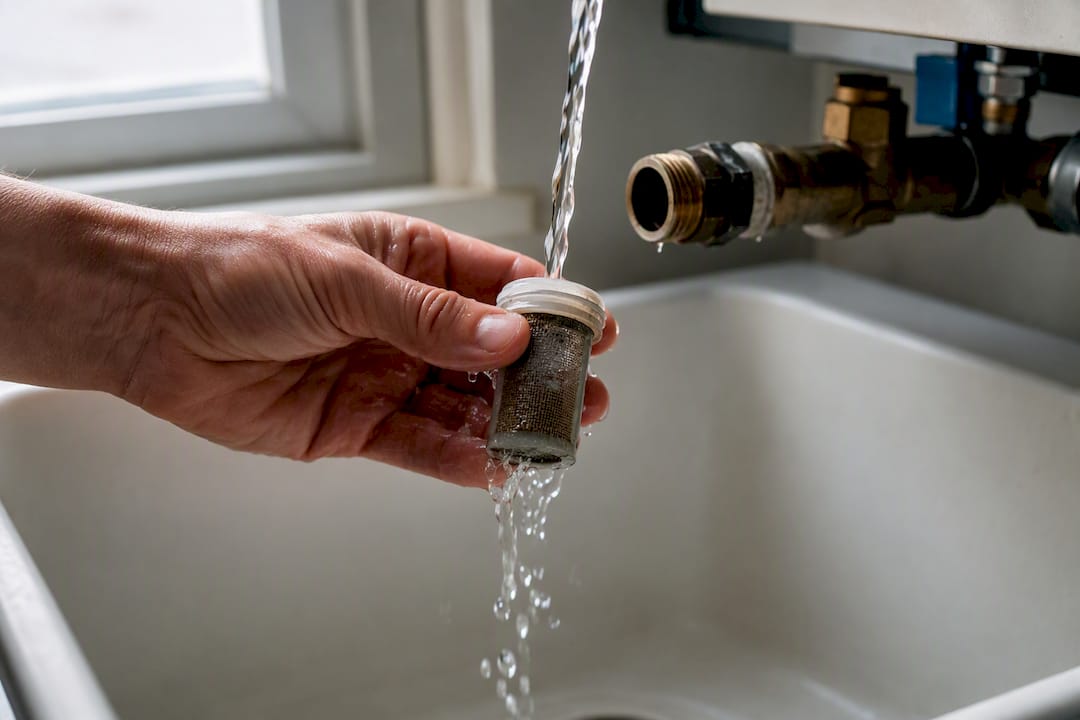
Tankless units almost always tell you what’s wrong if you know where to look. Check the digital display or fault light for an error code and write it down. Then check the inlet water filter, a mesh screen that clogs with sediment and restricts flow. Tankless systems need a minimum flow, often around 0.5 to 0.75 gallons per minute, to trigger ignition at all, so a partially closed isolation valve or a low-flow fixture can look exactly like a broken heater. Finally, glance at the exhaust venting for blockages, especially after storms or in units near vegetation.
Heat pump water heater not heating
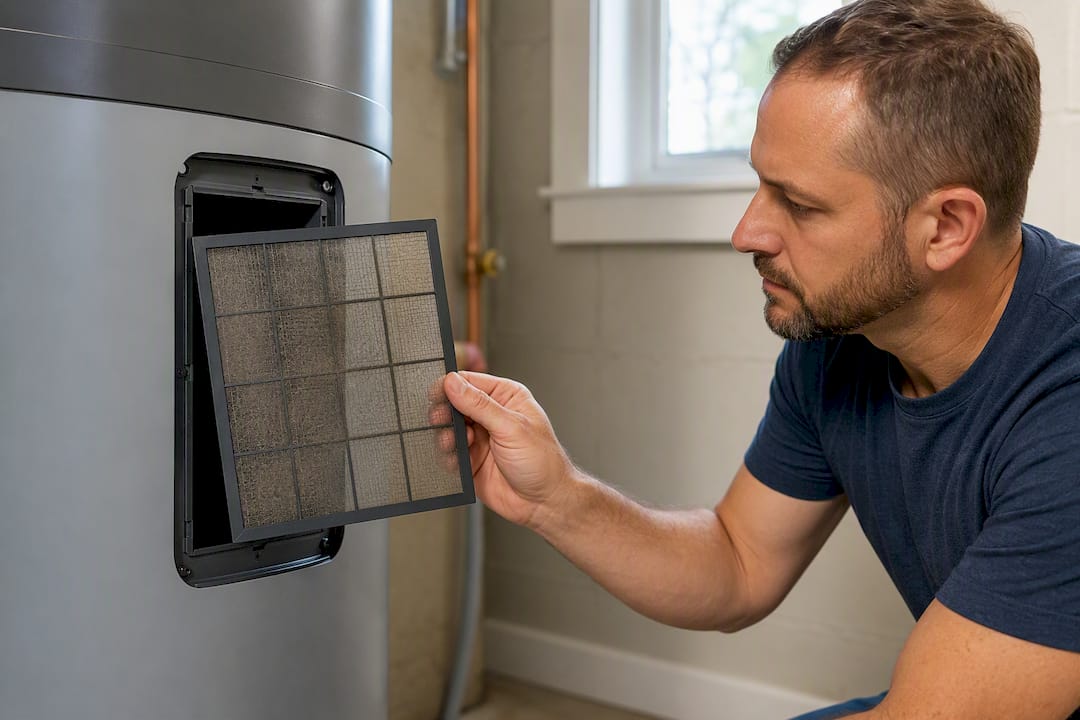
Heat pump units draw heat from surrounding air, so check first that the space around the unit isn’t blocked and that the air filter isn’t clogged. Most models have a control panel that displays fault codes similar to tankless units, and many can switch to standard electric resistance heating as a backup mode if the heat pump function fails, which is worth checking in the settings before assuming the whole unit is dead.
How long until you have hot water again? After a successful breaker reset or ECO press, give a tank 30 to 60 minutes to reheat a full tank of water. A relit gas pilot follows a similar window. Tankless units should perform normally the instant ignition succeeds, since there’s no tank to refill.
One warning worth repeating: if a breaker or ECO trips more than once after a proper reset, stop resetting it. Repeated trips are a sign of a failing thermostat or wiring fault, and forcing more resets risks damaging the element or starting an electrical fire.
When Should You Call a Plumber or Electrician?
Some situations aren’t DIY territory, no matter how handy you are. Call immediately for a gas odor, an active water leak, a discharging TPR valve, visible rust or corrosion eating through the tank, a breaker that trips the instant you reset it, or burned and melted wiring anywhere near the unit. On the gas side, a pilot that won’t hold a flame after you’ve already swapped the thermocouple, or a control valve that won’t respond, both point to a component failure beyond a simple relight.
Before you call, gather a few details that speed up the visit:
Heater type, brand, and model number (usually on a sticker on the tank)
Approximate age of the unit
What symptoms you’re seeing and any error codes displayed
What you’ve already tried
A few photos of the unit and the sticker, if you can safely take them
For cost context: small parts and repairs typically run $30 to $180, while full replacement of a tank unit installed usually falls between $700 and $1,800. As a rule of thumb, once a heater passes the 10 to 12 year mark and starts needing repeat repairs, replacement usually makes more financial sense than another patch job.
Pro Tip: Ask any technician for a written estimate before work starts, and confirm whether parts and labor carry a warranty. A verbal number over the phone isn’t the same commitment as one on paper.
How Do You Prevent Future Water Heater Problems?
Most sudden failures aren’t sudden at all. They’re the result of small maintenance items nobody got around to.
Flush the tank once a year to clear out sediment buildup, which insulates the lower element or burner and forces the unit to work harder for less heat.
Check the anode rod every few years and replace it if the water runs discolored or the tank is getting older. This rod sacrifices itself to protect the tank lining from corrosion.
Keep the thermostat set to about 120°F, the balance point between safety, energy use, and reduced sediment buildup.
Have the pilot assembly and thermocouple inspected annually on older gas units, since these are the parts that tend to fail first.
If you’re on hard water and run a tankless system, schedule descaling service to prevent scale from restricting flow and triggering the same minimum-flow shutdowns covered earlier.
A maintenance membership that includes scheduled inspections tends to catch a failing thermostat or a corroding anode rod before it becomes a Saturday morning cold shower. Sudden failures are rarely sudden, so if discolored water shows up specifically from the hot tap and not the cold, it’s worth reading up on what causes metallic-tasting water before assuming the worst.
How Texas Comfort Crew Handles a No-Hot-Water Call
Texas Comfort Crew’s approach starts from the same principle behind this whole checklist: fix what’s actually broken instead of pushing a replacement nobody needs yet. That means a technician who walks in already assuming repair is the first option, not the upsell.
A typical service visit for a no-hot-water complaint includes:
A full diagnostic run through the same breaker, pilot, ECO, and flow checks covered above, but with tools and testing that go beyond what’s safe to do yourself
Safety checks on gas lines, electrical connections, and the TPR valve
Photo documentation of what’s found, so you can see exactly what’s wrong instead of taking someone’s word for it
A written estimate before any repair work begins, whether that’s a thermocouple swap, a heating element and thermostat replacement, or a control valve diagnosis
Common repairs on local calls run the same range covered earlier: thermocouples and heating elements on the lower end, control valve work and tank flushes in the middle. The goal on every visit is the same one behind this article: give you the actual diagnosis, the actual cost, and let you decide, rather than deciding for you.
What Most Guides Get Backward About Water Heater Repairs
Most troubleshooting guides jump straight to “call a professional” somewhere around paragraph three, which does homeowners a disservice. The data backs a different order: work through the breaker, the pilot, or the reset button first, because a meaningful share of no-hot-water calls resolve with exactly that, no tools or parts required.
Where conventional advice really falls short is timelines. People reset a breaker, don’t see instant hot water, and assume the fix failed. A tank needs 30 to 60 minutes to reheat a full load of water even after everything is working correctly. Panic before that window closes is the single most common reason people call for service on a heater that was already fixed.
The other blind spot is treating every heater the same. A gas pilot problem and an electric ECO trip look identical from the homeowner’s chair, cold water and confusion, but the fix, the tools, and the risk profile are completely different. Splitting the checklist by fuel type isn’t a nice-to-have. It’s the difference between a five-minute fix and an afternoon wasted on the wrong panel.
What should you actually prioritize? Confirm scope first, always. Then match your unit type to the right checklist instead of guessing. And treat repeated trips or persistent gas odors as the hard stop they are, not a challenge to solve yourself.
— Dan Patino
Ready to Get Your Hot Water Fixed for Good?
If you’ve worked through the breaker, the pilot, or the reset button and you’re still standing in front of a cold tank, it’s time for a technician who diagnoses before recommending anything. A qualified technician can handle water heater repair, replacement, and emergency calls, providing a written estimate before any work starts and a preference for fixing the actual problem over selling a new tank.

Before you call, have a few things ready: the heater’s brand and model number, its approximate age, any error codes you saw, and what steps you’ve already tried. Photos of the tank and its data plate help too. If your water heater keeps causing surprises, ask about a maintenance membership that catches failing thermostats and elements before they leave you with a cold shower. Start with the plumbing services page to see what’s covered, or check the service area page to confirm coverage near you.
Sources
FAQ
What’s the first thing to check when there’s no hot water?
Run hot water at two or three different fixtures. If all of them are cold, the problem is the heater or its power source, not an isolated faucet issue.
How do I reset my hot water heater?
For electric units, cut power at the breaker, remove the upper access panel, and press the red high-limit reset (ECO) button before restoring power. For gas units with a standing pilot, follow the relighting instructions printed on the tank, and never attempt this if you smell gas.
How can you tell if a heating element is bad?
Test it with a multimeter. A working element reads roughly 10 to 30 ohms, while infinite resistance means it’s failed and needs replacing.
What’s the most common problem with a hot water heater?
For electric units, it’s a tripped breaker or a tripped ECO reset. For gas units, it’s an extinguished pilot or a failed thermocouple. For tankless units, it’s usually a low-flow condition or a clogged inlet filter triggering an error code.
Should I repair or replace my water heater?
If the unit is under 10 to 12 years old and this is a one-off failure, repair almost always makes sense, with parts typically costing $30 to $180. Past that age, or with recurring failures, replacement at $700 to $1,800 installed tends to be the better long-term move, and a technician like those at Texas Comfort Crew can walk you through the tradeoff before you commit either way.
Recommended
Comments