
Stop a Musty AC Smell in One Day: DIY Fade Time Test for Homeowners

Most musty AC smells come from moisture sitting on the indoor evaporator coil or trapped in a clogged condensate drain. If the odor is strongest right when the system kicks on and fades within a few minutes, that’s your coil or drain pan. If it lingers the whole time the system runs, check your ducts and indoor humidity. Either way: change the filter, set the fan to Auto, and flush the drain today.
TL;DR:
Most musty AC smells originate from moisture trapped in the evaporator coil or condensate drain, especially if the odor is strongest at startup and fades within minutes.
Dirty filters, clogged drain lines, or standing water in the drain pan exacerbate microbial growth and prolong the musty odor, requiring immediate cleaning or replacement.
Persistent or worsening odors during long system runs often indicate duct leaks or high indoor humidity that keep moisture active beyond coil issues.
A quick fade-time test can help differentiate between coil-related odors and those caused by building moisture or duct problems.
Professional inspection is necessary if odors persist after DIY fixes, or if mold appears on blower fans or outside clear indicators of drainage or duct issues.
Table of Contents
What Causes a Musty AC Smell?
An air conditioner smells musty for one basic reason: something inside it is wet longer than it should be. Cooling coils condense moisture out of the air constantly, and that moisture has to drain away fast. When it doesn’t, you get biofilm, a thin, slimy layer of mold and bacteria that smells exactly like a damp basement.
The evaporator coil is usually the first suspect. Dust and skin cells land on the wet coil surface all summer, and that organic material feeds microbial growth in the dark, humid cabinet around it. This is why the smell often hits hardest at startup after the system has sat idle for a few hours: stale, moisture-laden air trapped in the coil compartment gets pushed out first, then clears as fresh air moves through.
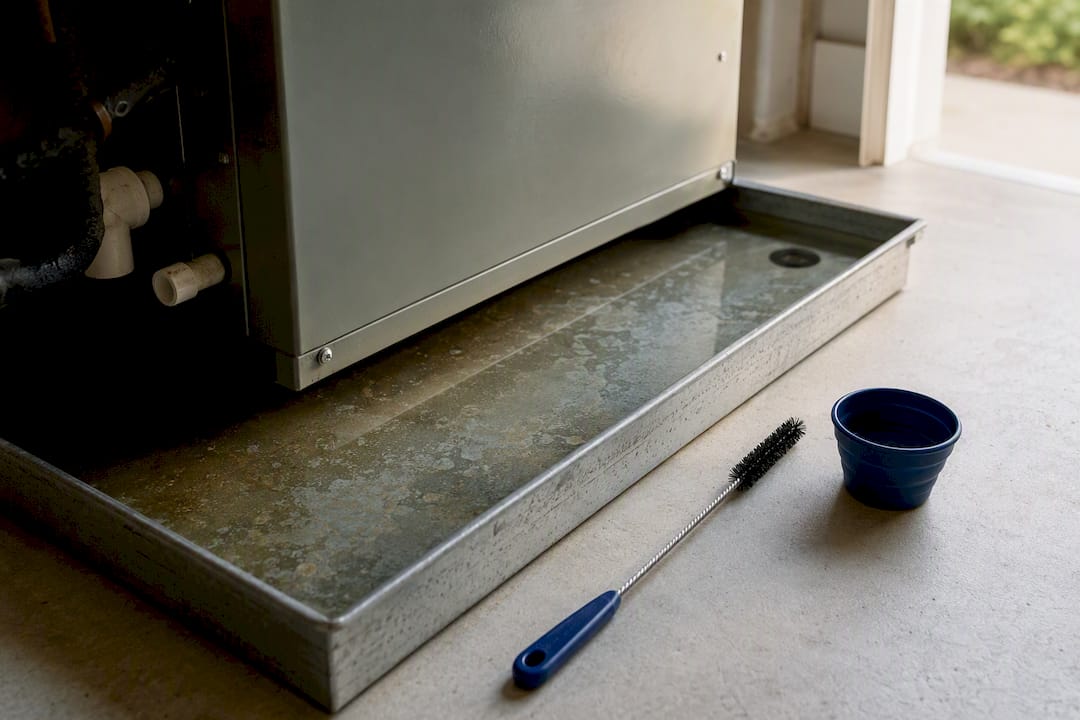
The condensate drain line and drain pan cause the second most common version of this problem. A clogged drain line lets water back up into the pan, where it sits, stagnates, and grows the same kind of biofilm you’d find in a neglected fish tank. Standing water in the pan is one of the clearest signs something needs attention now, not later.
Dirty or wet filters make everything worse. A clogged filter restricts airflow, which drops the temperature across the coil, increases condensation, and lets more dust bypass the filter media and settle on damp surfaces. A soaked filter, meanwhile, is often a symptom of a drain problem rather than a cause.
Ductwork and return-side leakage explain the cases DIY steps don’t fix. Leaky returns can pull damp air from crawlspaces, attics, or basements into the system, and that moisture never touches the coil at all, so cleaning it does nothing.
Startup-only odors that fade in 5 to 15 minutes point to coil or pan moisture. Constant or strengthening odors during long runs point to ducts or building moisture.
High indoor humidity and short cycling set the stage for all of the above. A system that never runs long enough to fully dry its coil, or a home that consistently sits above 60% relative humidity, gives biofilm a permanent head start.
Common contributors, ranked by how often they show up on service calls:
Evaporator coil biofilm from residual moisture and dust
Clogged condensate drain line or standing water in the pan
Dirty or saturated air filter restricting airflow
Leaky return ducts pulling in damp crawlspace or attic air
Chronic high indoor humidity or a short-cycling system
What Should You Check First to Fix a Musty AC Smell?
Work through these steps in order. Most homeowners solve the problem in the first three.
Replace the filter. Pull it and look for wet spots, mold flecks, or heavy gray buildup. A MERV 8 to MERV 11 filter balances filtration and airflow well for most residential systems; going higher without checking your system’s static pressure rating can choke airflow and make condensation worse, not better.
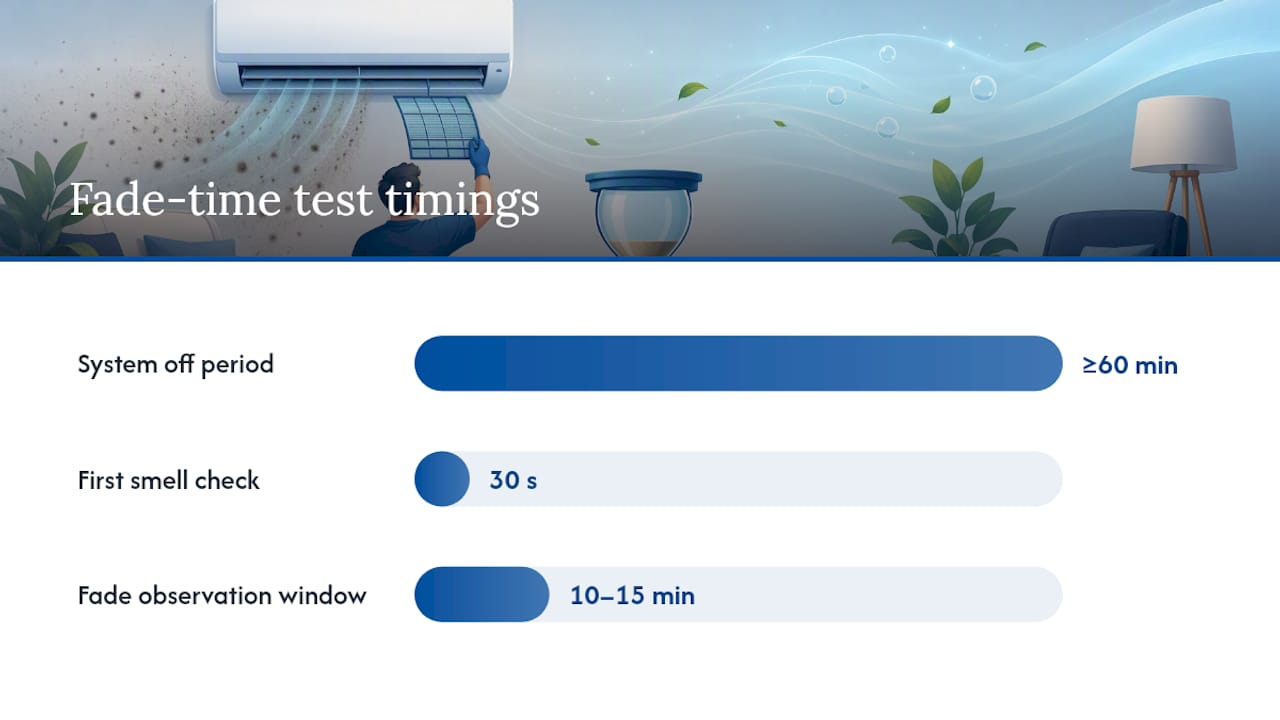
Run the fade-time test. Turn the system off for at least an hour, then start it and stand near a return vent. Note whether the smell is strong at the first 30 seconds and mostly gone by the 10 to 15 minute mark. A fast fade points to the coil or pan. A smell that holds steady or grows stronger points elsewhere.
Flush the condensate drain line. Locate the outdoor PVC drain termination, usually near the outdoor unit, and use a wet-dry vacuum to pull the clog out, or pour a cup of white vinegar (never bleach on some materials, check your unit’s manual) down the indoor access port to break up buildup.
Inspect and empty the drain pan. Standing water here confirms a drainage problem even if the line looks clear near the access point. Wipe it out and check for a cracked or misaligned pan while you’re in there.
Set the thermostat fan to Auto, not On. Running the fan continuously keeps pushing air across a wet coil and re-evaporates trapped moisture, which spreads odor through the whole house instead of letting it fade.
Rinsing the coil itself with a no-rinse foaming cleaner is reasonable DIY territory if the coil is easily accessible through a removable panel and you’re comfortable working near electrical components, as advised by what is the best thing to clean interior doors with. If reaching the coil means removing ductwork, disconnecting refrigerant lines, or you find heavy black mold rather than light biofilm, stop and call a technician.
Pro Tip: Do the fade-time test before you call anyone. Telling a technician “it fades in ten minutes” versus “it never goes away” cuts diagnostic time in half and can save you a second visit.
When Should You Call an HVAC Technician for a Musty Smell?
Some situations are past the point where a filter change or drain flush will fix things.
The smell persists after you’ve replaced the filter, flushed the drain, and cleaned the pan
You see standing water that returns within a day or two of clearing it
Visible mold growth extends beyond a thin film, especially black or fuzzy patches
A household member develops coughing, sinus irritation, or headaches tied to time spent near the vents
The system’s float switch keeps tripping and shutting the unit down
A technician checks the same chain you did, just deeper: the drain line’s slope and termination point, the pan’s condition and fit, the coil surface under the access panel, duct connections for leakage, and whether the system is correctly sized for the humidity load it’s handling. Short cycling from an oversized system leaves moisture on the coil that never fully evaporates between cycles, which a filter change can’t touch.
Before you agree to any work, ask for a diagnostic fee upfront, a written scope of exactly what gets inspected and cleaned, and photos of anything they find. A trustworthy HVAC company explains repair options before jumping to replacement, and gives you realistic pricing context so a quote doesn’t come as a surprise.
How Do You Keep the Musty Smell From Coming Back?
Prevention here isn’t complicated. It’s consistency.
Replace the filter every 60 to 90 days in mild months, and every 30 to 45 days during heavy summer cooling season
Flush the condensate drain monthly during cooling season, quarterly the rest of the year
Keep indoor relative humidity under 60% using the AC’s normal dehumidification or a standalone unit in humid climates
Leave the thermostat fan on Auto so the coil gets a chance to dry between cycles
Book an annual professional tune-up that includes a drain and coil check, not just a refrigerant top-off
If you’ve done all of this and the smell still comes back every few months, a UV-C germicidal light installed near the coil or a whole-house dehumidifier addresses the moisture problem directly instead of managing symptoms. Neither is cheap, but both make sense for homes that stay humid year-round or have coils that grow biofilm fast regardless of how often they’re cleaned.
Pro Tip: A maintenance plan that bundles filter reminders with an annual coil and drain inspection removes the guesswork. It’s the difference between remembering to flush a drain and actually doing it.
How Texas Comfort Crew Handles a Musty AC Call
When Texas Comfort Crew gets a musty AC smell call in the Greater San Antonio area, the visit follows a straightforward inspection checklist: filter condition, drain line and pan, coil surface, then duct connections if the first three come up clean. That order mirrors the DIY steps above because it works, and it catches leaky return ducts or building moisture before recommending anything more invasive. The team’s repairs-first approach means a coil rinse or drain repair gets proposed before a full system replacement ever comes up, with the reasoning explained in plain terms so you understand exactly what you’re paying for and why.
Can Mold Grow Inside the Air Handler or Blower Fan?
Yes, and it’s easy to miss because the blower fan sits behind the filter and coil, out of casual view. Mold on the blower wheel looks like dark speckling or a fuzzy coating on the fan blades themselves, and it often smells stronger than coil mold because the fan is actively moving air across it every time the system runs.
You’ll usually need to remove an access panel to see the blower compartment directly. Signs to look for include visible dark buildup on the fan blades, a musty smell that seems to originate near the blower housing rather than the coil, or a fan that looks coated even after the coil has been cleaned. Because the blower sits downstream of the coil, moisture that drips or condenses past a poorly sealed coil cabinet often lands here too.
Cleaning a blower wheel properly means removing it or the fan assembly, which typically requires disconnecting electrical leads and sometimes refrigerant lines depending on the unit’s layout. This isn’t a wipe-down-with-a-rag job. If you spot mold on the blower during your own inspection, that’s a clear signal to call a technician rather than attempt a DIY cleaning, since an improperly reassembled blower motor can cause bigger problems than the smell ever did.
What Homeowners Get Wrong About Musty AC Smells
The biggest mistake is running the fan constantly to “air out” the smell. It does the opposite: continuous airflow re-evaporates moisture sitting on the coil and pushes odor through every room instead of letting it fade at the source. Try the fade-time test first, and if you want a second clue, close interior doors one at a time while the system runs. A smell that gets stronger with certain doors closed points to return-side pressure pulling in damp air from somewhere you’re not expecting.
— Dan Patino
Get a Musty AC Smell Diagnosed the Right Way
A DIY filter swap and drain flush solves plenty of cases, but not the ones involving duct leakage, an undersized drain line, or blower mold that needs a trained hand. A musty-AC diagnostic should cover this checklist: filter condition, condensate clearance, coil assessment, and a duct check if the source isn’t obvious after the first three, followed by a written estimate before any work starts.

That repairs-first promise means you’re not pushed into a full system replacement when a coil rinse or drain repair solves the problem. Maintenance plan customers may get priority scheduling and seasonal tune-ups, so filter changes and drain checks can happen on a regular schedule rather than only when odors become noticeable. If you’re in Stone Oak, New Braunfels, or anywhere across the Greater San Antonio service area, schedule a diagnostic visit and get a technician looking at your coil and drain before the smell spreads any further through the house.
Sources
For more on drain diagnostics and coil moisture, see Home Comfort Tips and Trane’s troubleshooting guide. For duct cleaning credential questions, contact NADCA, the National Air Duct Cleaners Association.
FAQ
How Do I Get My AC to Stop Smelling Musty?
Start with the filter, flush the condensate drain, and set the fan to Auto instead of On. If the smell persists after those three steps, the source is likely ductwork or a coil issue that needs a professional inspection.
Will a Musty AC Smell Go Away on Its Own?
Rarely. Biofilm on a coil or in a drain pan keeps growing until the moisture source is addressed, and running the fan continuously often spreads the odor rather than resolving it.
What Does a Moldy Air Conditioner Smell Like?
A moldy AC smells like a damp basement or wet towel left in a gym bag, a musty, earthy odor that’s strongest at startup if the source is coil or drain moisture, and constant if ducts or building humidity are involved.
Why Does My Air Conditioner Smell Musky Even After Cleaning the Filter?
A clean filter rules out the easiest fix, which means the drain line, drain pan, or coil is next to check. If those come up clear too, leaky return ducts pulling in damp air from a crawlspace or attic are the likely remaining cause.
Recommended
Comments